Dolly Parton’s Imagination Library
Dolly Parton’s Imagination Library has come to Hamilton County!
The Imagination Library provides one high-quality children’s book every month for an enrolled child from birth to age five. Any Hamilton County family with a child under 5 is eligible. The program fosters broader access to early childhood literacy which is a strong predictor of outcomes for health, educational attainment, and more.
The program is made possible by initial funding from Hamilton County Council and a grant from CenterPoint Energy Foundation. Ongoing support is facilitated by HCCF and the following libraries:
Resources for Parents
Good Reading Habits
Imagination Library has lots of experience with caregivers, children, and reading. We encourage good reading habits for parents, caregivers, and their children. When your child receives their Imagination Library books, we ask you to do the following:
- Begin reading to your child immediately
- Read to your child at least five days per week
- Read books multiple times
Snuggle, ask questions, notice letters, make sounds, have fun!
Fun Activity Sheets
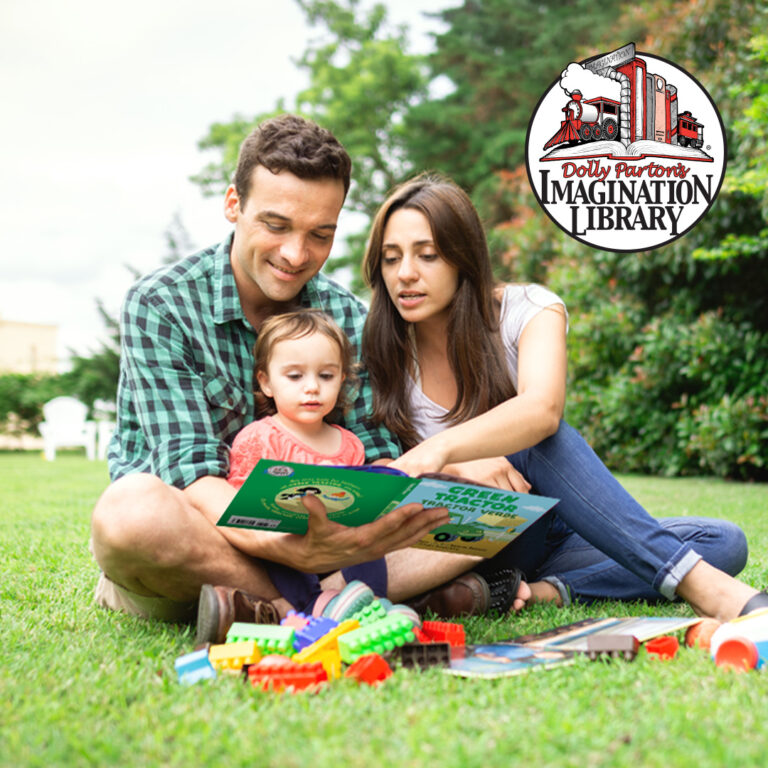
Making 10 minutes a day to share books with your child will make a huge difference to their development. Here we share fun coloring and activity sheets featuring some of the popular titles included in Dolly Parton’s Imagination Library. Feel free to download these sheets and share them with a friend.
- “The Gruffalo!” By Julia Donaldson and illustrated by Axel Scheffler »
- “Maple” By Lori Nichols »
- “The Tale Of Peter Rabbit” By Beatrix Potter »
- “The Little Engine That Could” By Watty Piper »
- “Coat of Many Colors” By Dolly Parton »
- “Llama Llama Red Pajama” By Anna Dewdney »
- “Max and the Tag-Along Moon” By Floyd Cooper »
- “There’s a Hole in the Log on the Bottom of the Lake” By Loren Long »
- “Last Stop on Market Street” By Matt De La Peña »
- “Violet The Pilot” By Steve Breen »
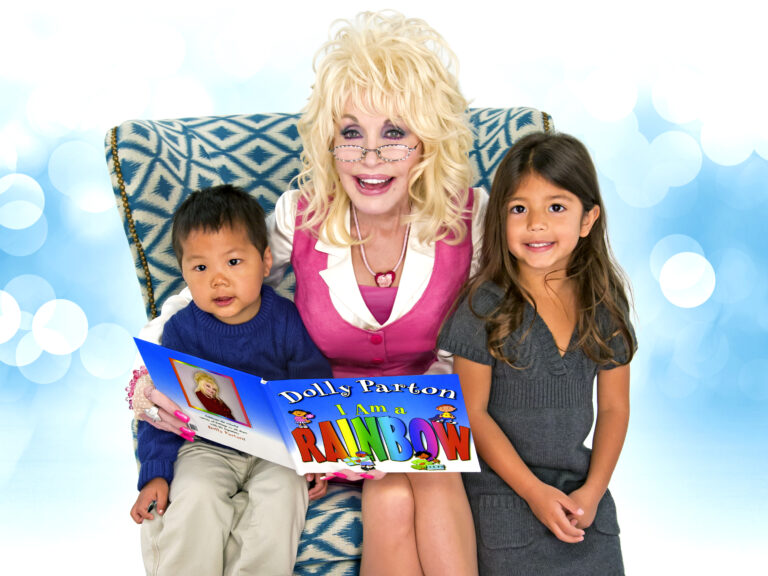
- “I Am A Rainbow” By Dolly Parton »
- “Pass It On” By Sophy Henn »
Reading Tips for Birth To 2 Years Old
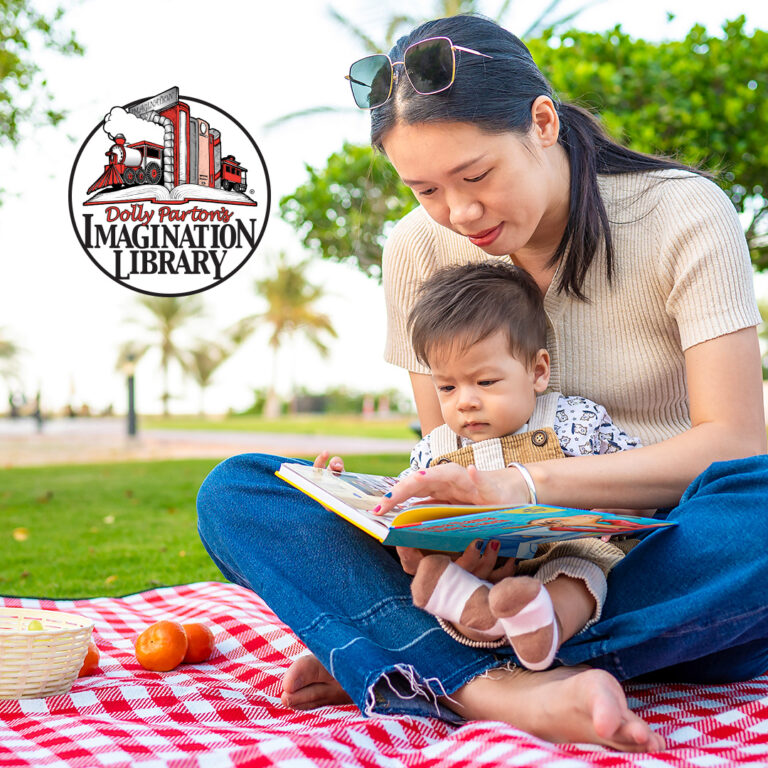
Begin reading to your child immediately. It may seem silly to read to very young children, but it will help you bond with your child and establish an important foundation for future learning. The earlier you start, the better the results!
Read to your child every day. Children who are avid readers were read to every day from a very young age. Make reading a regular event in your home.
Read books multiple times. Reading the same book over (and over) reinforces language development and encourages children
to participate in the reading activity.
Reading = snuggling!
Read for short periods with your child on your lap or next to you. Being close to you is likely as important as the reading.
Keep books handy!
Set up a space to keep your child’s books where they will be accessible.
Be flexible!
Take a break if your child is unhappy or fussy. Read multiple times per day for short periods rather than one longer period if that works better.
Reading Tips for 2 To 3 Years Old
- Begin reading to your child immediately. It’s never too early to start reading to your child. Reading to very young children helps develops early literacy skills.
- Read to your child every day. Children who are avid readers were read to every day from a very young age. Make reading a regular event in your home.
- Read books multiple times. Reading the same book over (and over) builds vocabulary and encourages children to participate in the reading activity.
Ask questions!
Ask your child simple questions about the book.
Examples: What was your favorite part of the book? Where did Corduroy go when he explored the store?
Notice letters!
Point out letters in the text. Example: Let’s find the m’s on this page.
Flip it!
Have your child open the cover and turn the pages of the book while you read.
Name it!
Ask your child to name items in the pictures before reading the text.
Chime in!
Encourage your child to “read” with you on familiar books and repetitive text.

Reading Tips for 3 To 5 Years Old
Continue reading to your child as he/she ages. Children continue to benefit from being read to in the pre-school years, building essential early literacy skills as they grow into readers.
Read to your child every day. Children who have high interest in reading are read to every day, often by multiple people.
Make reading a regular event that everyone participates in.
Read books multiple times.Reading the same book over (and over) encourages children to participate in the reading activity through
contributing to the “reading” and asking questions.
Think about it!
Ask your child questions about the characters or the story that require predicting, imagining, or making inferences.
Examples: How do you think Madeline feels right now? If you were Peter Rabbit, what would you do?
Make it relevant!
Relate books to your child’s life.
Example: Can you think of a time you were reluctant to try something new like Little Burro?
Begin with sounds!
Point out beginning sounds.
Example: Did you hear a word that started with the same MMMMM sound as your name?
Name it!
Practice letter names.
Example: Name the letters you recognize on the cover of the book.
Read it!
Encourage your child to read common words.
Example: This word, t-h-e, is the. Help me read “the” when you see it in the book.
Encourage curiosity!
Respond to your child’s questions about letters, numbers, and reading.